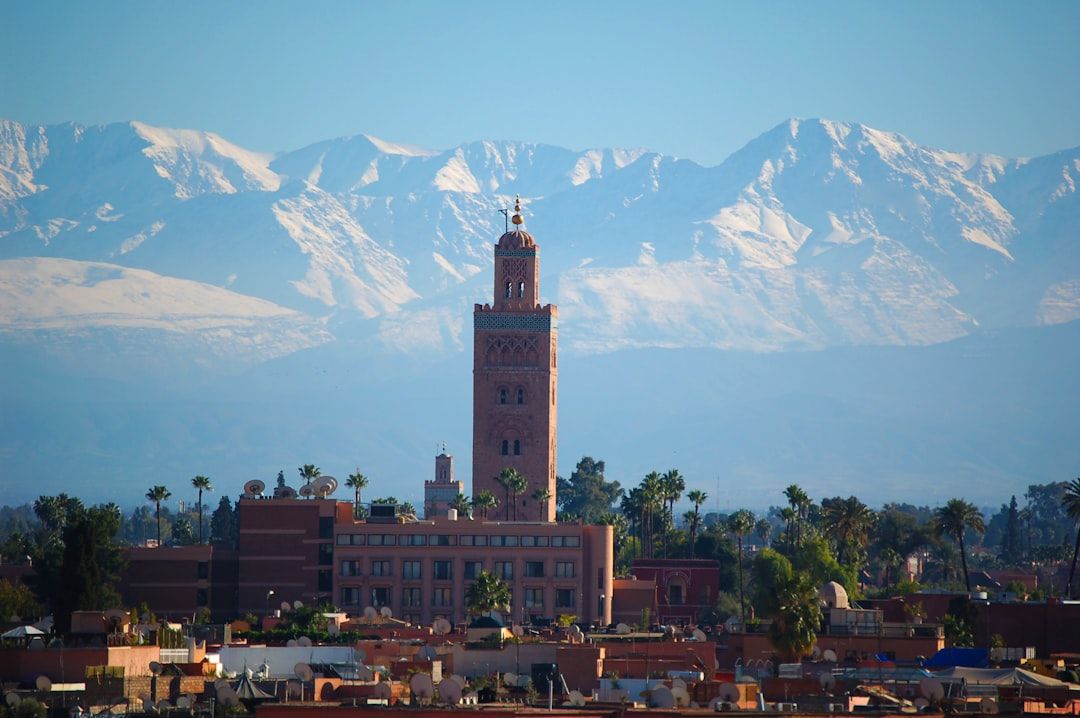
Marrakech's medina is a deliberately disorienting street plan of roughly a thousand alleys, and the guide question here is unusual: it is less about interpretation than about who is steering you.
Official versus unofficial guides
Official guides carry a licence badge, are booked through your riad or the tourist office, and charge a set rate — typically 300–500 dirhams for a half day. They are trained, know the history, and are not paid commission by shops.
Unofficial guides attach themselves in the street, often opening with a warning that the way you are heading is closed or that the tanneries are only open today. The walk usually ends at a relative's shop with a long tea-and-carpets session.
It is a nuisance rather than a danger, and the polite exit is to decline firmly at the outset rather than after twenty minutes of walking, when leaving is socially awkward. That awkwardness is the design.
An official guide for a first half day removes most of this, because you are visibly accompanied.
Worth booking
A Sahara trip to Merzouga. Three days including transport, a night in a desert camp, meals and a camel ride, for €80–150 per person in a shared group.
Below that price you are buying a larger group and a more rushed schedule. The drive is around ten hours each way through the Atlas regardless, and the two-day version is almost entirely driving. Merzouga has larger dunes than Zagora.
A cooking class, which usually starts at a market and covers tagine and bread. Good value at 400–700 dirhams.
An Atlas day trip to Imlil or the Ourika valley, which is straightforward to arrange and gets you out of the heat.
Do independently
The medina and the souks. Offline maps work reasonably well, and getting lost is part of it. The souks are organised loosely by trade — leather, metalwork, dyers, spices.
Jemaa el-Fnaa after dark, when the food stalls set up. Agree prices before ordering.
The Bahia Palace, the Saadian Tombs, Ben Youssef Madrasa — all ticketed, all self-explanatory.
Le Jardin Majorelle, which is beautiful, small and extremely busy. Book ahead and go at opening.
Bargaining
Applies in souks and unmetered taxis, not in cafés, supermarkets or fixed-price cooperatives.
Open at about a third of the first quote, settle near half, and treat walking away as part of the process. If the seller lets you go, you were near the floor.
Government-run artisan cooperatives sell at fixed prices that are frequently comparable to a well-bargained souk price, which is worth knowing if you dislike negotiating.
The hammam
Public neighbourhood hammams are gender-segregated, cost a few dirhams, and you bring your own soap and kessa mitt or buy them at the door. Locals use them weekly.
Riad hammams charge €30–60 for a private version with argan oil and a massage.
Both involve a vigorous scrub that removes considerably more skin than most visitors expect. It is not a spa treatment.
Practical
Riads are inside the medina, where cars cannot go. Arriving with luggage means a walk through narrow lanes; most riads will send someone to meet you at a gate if you ask.
Heat. Marrakech regularly exceeds 40°C in July and August. March to May and September to November are the seasons.
Ramadan changes the rhythm considerably — many restaurants closed during daylight, and the evenings alive. Travel is entirely possible, and worth planning around rather than into.